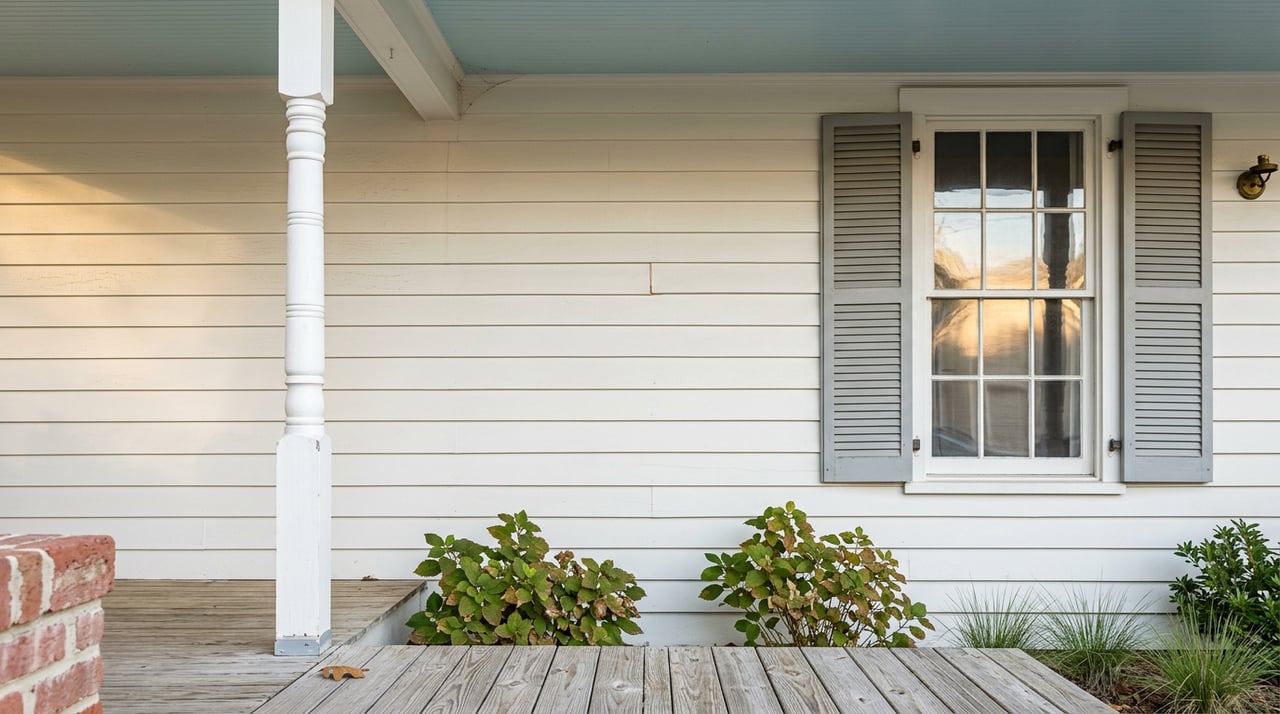
The list price on an Apalachicola historic-district cottage is a number the seller controls. The three numbers that decide what you actually pay to own it, month after month, are controlled by a city board, a FEMA rating engine, and a 4-point inspector. Most out-of-market buyers see the first number on a portal and start comparing it to Port St. Joe or Mexico Beach. That is the wrong comparison, because the mechanism setting cost of ownership here is unlike the mechanism on either of those coasts.
The town has a working waterfront that just came back online. The Apalachicola Bay reopened to oyster harvest on January 1, 2026, the first opportunity to harvest from the bay since 2020, when bay-wide declines led to a closure. That reopening changes the demand curve for the exact blocks where the paperwork is heaviest. It is worth understanding what you are buying into before you lean on a median price to make the call.
The three documents that decide what an Apalach home costs
Cost of ownership in the historic district is a documentation exercise. Three files, in this order, do more to shape your annual carrying cost than the sale price does:
- A Certificate of Appropriateness (COA) from the City of Apalachicola Planning & Zoning Board, which also sits as the Architectural Review Board.
- An elevation certificate and the flood insurance premium it generates under FEMA's Risk Rating 2.0.
- A 4-point inspection clean enough to keep the property in the admitted homeowners market rather than pushing it to specialty carriers.
None of these appear on a listing sheet. All three are negotiable in due diligence if you know to ask.
What the median hides in a district drawn in 1980
An area of Apalachicola was designated as a Historic District and listed in the National Register of Historic Places on November 21, 1980. Everything inside that boundary is subject to the COA process. Everything outside it is not. The median price does not distinguish between them.
Here is what the current market data looks like once you set the boundary aside:
| Data point | Value | Window |
|---|---|---|
| Median list price | $424,000 | July 2026 |
| Median list, prior source | $429,000 | June 2026 |
| Median days on market | 142 | July 2026 |
| Average sale price | $479,853 | June 2026 |
| YoY change in home values | -0.45% | June 2025 to June 2026 |
Movoto's July 2026 read and Homes.com's June 2026 read are within a few thousand dollars of each other, which is unusual for a market this small and tells you the pricing signal is real rather than a data artifact. What it does not tell you is which side of the district line the sample sits on, or how high the first floor is above the base flood elevation. Those two questions decide the next twenty years of carrying cost.
The COA is a schedule risk, not just a design risk
If your property falls within the historic district, it is subject to review for a Certificate of Appropriateness along with the standard P&Z Site Plan Approval. This applies to new construction, additions, accessory structures, fences, and any exterior renovations involving changing materials. The P&Z Board serves as the Architectural Review Board, and all P&Z applications include a Certificate of Appropriateness if they are within the historic district. That covers roof replacement in a different material, window swaps, porch rebuilds, and any exterior siding change.
Two consequences follow. First, the review is a schedule item. If you buy in late spring planning a summer roof replacement in a non-original material, you are on the P&Z calendar, not your contractor's. Second, non-compliance is priced in advance. Failure to apply for a COA is a residential fine of $150 and a commercial fine of $1,000. The fine is small enough that some owners treat it as a risk-adjusted cost. The larger exposure is a stop-work order that lands during hurricane-shortened construction windows.
The design vocabulary the board is protecting is specific. The most common building forms in Apalachicola are the story-and-a-half cottage with two or three dormers, the one-story umbrella-roofed house often with side porches, the two-story house with hipped or umbrella roof and two-story galleries, and the story-and-a-half house with Palladian influence. If you are buying to renovate, the practical read is: additive work sympathetic to those forms clears review faster than subtractive or modernizing work.
Risk Rating 2.0 rewards the house next door for being two feet higher
Flood pricing here no longer runs off the zone letter alone. Under the NFIP's Risk Rating 2.0, your premium is driven by your home's distance to flooding sources, rebuild cost, and elevation, including first-floor height. On the same Apalachicola block, two 1910 frame cottages can carry very different premiums because one sits on a brick pier system a couple of feet taller than its neighbor.
The NFIP has hard limits worth planning around. Standard homeowners policies exclude flood damage, and flood protection is arranged separately, through the NFIP with up to $250,000 building and $100,000 contents, or the private flood market, which can go higher. On a historic cottage with heart-pine floors and custom millwork, a $250,000 dwelling cap can leave a meaningful uninsured gap. That is a private-market conversation, not an NFIP one.
One listing detail from the current market makes the elevation point concretely. A North Side Historic District cottage on the market this summer described the home and the majority of the lot as sitting on higher elevation above the flood zone, marketed as a desirable feature. That premium exists because Risk Rating 2.0 lets it exist. A neighbor two doors down, two feet lower, does not get that pricing.
The 4-point inspection is the ticket into the admitted market
Historic frame construction is insurable, but the underwriting bar is higher than for a 2010-built beach house. Apalachicola's National Register historic district holds one of Florida's largest concentrations of 19th- and early-20th-century buildings, and insuring one is a documentation exercise. Carriers want to see updated wiring, plumbing, and roofing, and a clean 4-point inspection is the ticket into the markets that write these homes. Two coverages earn extra attention on a historic home: law and ordinance coverage, because rebuilding to current code after a partial loss can cost meaningfully more on a century-old structure, and an accurate Coverage A, because reproduction-quality carpentry doesn't price like tract construction.
Practical translation for a buyer: ask the seller for the last 4-point on file before you write the offer. If wiring is knob-and-tube or the panel is a discontinued brand, you are either negotiating a credit or shopping specialty carriers. Neither is a deal-killer. Both are line items you want on the page before closing, not after.
Why January 1, 2026 matters for a house you are not buying to fish from
The bay reopening is a demand signal for the working-waterfront blocks. The reefs open to harvest for the January 1 to February 28, 2026 season are RESTORE Peanut Ridge, RESTORE Cat Point Spur, RESTORE Easthole, and NFWF Cat Point. Approved certified shellfish landing sites in town include Leavins Seafood Inc. at 101 Water Street, Leavins Seafood Too at 100 Water Street, and Water Street Seafood at 592 West Highway 98.
Those addresses matter to a residential buyer because they anchor the downtown blocks tourists actually walk. The restaurants and shops on Market, Commerce, and Water Streets depend on that foot traffic. When the fishery came back, the reason to visit Apalachicola in October and November came back with it. FWC has stated the next season will run October 1, 2026 through February. That extends the town's shoulder-season economy in a way that changes rental math on any historic-district cottage a buyer might operate part-time.
Three questions to ask before you write the offer
- Is the parcel inside the National Register district boundary drawn in 1980, and if so, is there any exterior scope of work you would want in year one that would trigger COA review?
- What does the current elevation certificate show for first-floor height, and what is the last renewal premium the seller actually paid, not the online quote?
- Is there a clean 4-point inspection from the last four years, and if not, who is going to pay for the updates the admitted carriers require?
FAQ
Are historic-district homes eligible for the same insurance carriers as newer construction?
Often yes, provided the 4-point inspection is clean and law-and-ordinance coverage is written in. Where the admitted market declines, specialty carriers write these houses at higher premiums. Ask your agent to bind two options before removing the insurance contingency.
Does buying in the historic district lock me out of modern updates?
No. COA review governs exterior appearance and material changes visible from the public right of way. Interior renovations, HVAC upgrades, kitchen and bath work, and most rear-of-house scope proceed on a normal permit track. Front-facing work needs the board's sign-off.
How much of Apalachicola is actually inside the district?
A large share of the downtown grid and the residential blocks around the seven historic squares, including Gorrie, Chapman, Madison, Franklin, and Washington. The city planning office publishes the boundary and will confirm any specific parcel before you write.
If you are working through a specific parcel and want the COA scope, elevation math, and insurability picture pulled together before you sign, that is the conversation to have with an agent who lives inside this district. Chasity Hill works these blocks year-round. Talk with Chasity — Schedule a Tour.