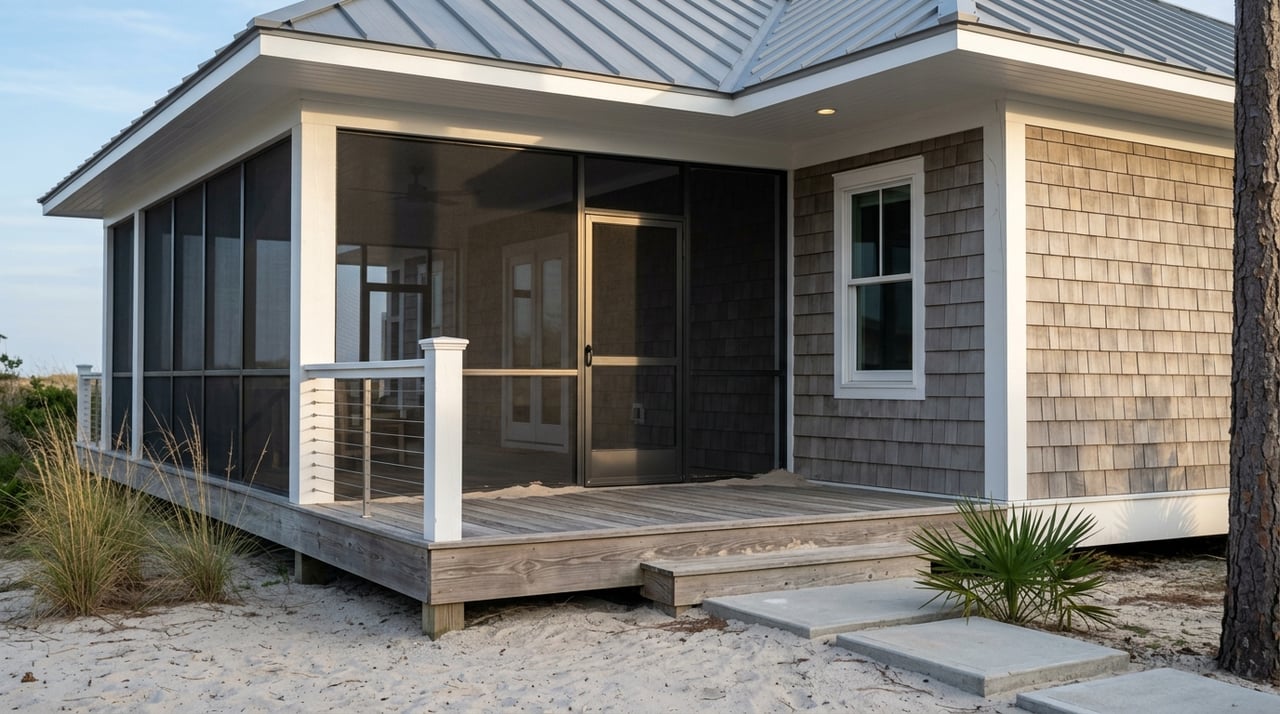
If you are eyeing a vacation rental on Cape San Blas, one question can shape your budget, timeline, and stress level fast: should you buy a turnkey home or take on a fixer? Both paths can work on the Forgotten Coast, but they come with very different tradeoffs in a coastal market where flood zones, permits, inspections, and insurance matter as much as finishes. This guide will help you weigh speed versus upside, understand the local rules that affect rental-ready status, and decide which route fits your goals. Let’s dive in.
Why this choice matters on Cape San Blas
Cape San Blas is not a market where you can judge a property by photos alone. A home may look beautifully updated, but your real decision also includes flood exposure, licensing steps, tax setup, and whether the property has any coastal construction complications.
That matters even more in a tourism-driven area like Gulf County. The county’s Tourist Development Council is funded by a 5% tourist development tax on overnight stays of six months or less, and those visitor dollars support beaches, parks, public facilities, events, public safety, and the local economy. In other words, vacation rentals are part of the local economy, but owners still need to be ready for the rules that come with that opportunity.
What “turnkey” means for a rental buyer
A turnkey vacation rental usually means a home is already furnished, functional, and closer to guest-ready at closing. For many buyers, that creates a simpler path to getting into the rental pool without a long renovation period.
On Cape San Blas, that lower-friction start can be valuable. Gulf County requires local short-term rental licensing and annual inspection, and Florida requires state lodging registration and tax setup for taxable short-term accommodations. If the property is already in good shape and aligned with local requirements, you may be able to move from closing to launch with fewer delays.
Benefits of a turnkey rental
A turnkey home often fits buyers who want speed and more certainty. If your goal is to begin personal use or rental activity soon after closing, a move-in-ready property can reduce the number of unknowns.
Common advantages include:
- Faster path to rental readiness
- Less renovation coordination after closing
- Easier budgeting upfront
- Better fit for buyers coming from out of town
- More immediate use for family vacations and guest stays
That said, turnkey does not mean risk-free. You still need to confirm flood zone details, insurance terms, parcel-specific CBRS status, and whether any previous work was properly permitted.
What “fixer” means on the Forgotten Coast
A fixer can be appealing when the location, lot, or views are strong and the price leaves room for improvement. In theory, you buy below the finished-product price, make upgrades, and create added value over time.
On Cape San Blas, though, a fixer often means more than paint and furniture. Coastal properties can involve code upgrades, elevation issues, septic coordination, and review tied to flood rules or coastal construction requirements.
Benefits of a fixer rental
For the right buyer, a fixer can open the door to a better location or a lower entry price. It can also give you more control over design, layout updates, and rental positioning.
Potential upsides include:
- Lower purchase price relative to a finished home
- Opportunity to add value through improvements
- More control over finishes and guest-facing design
- Chance to modernize systems and features during renovation
Still, the upside only works if you are ready for the timeline and complexity. In this market, hidden time costs can be just as important as hidden repair costs.
Local rules can change the math
This is where Cape San Blas separates itself from many inland vacation markets. Gulf County has adopted the 2023 Florida Building Code and requires one foot of freeboard above base flood elevation for most flood-zone structures. The county also notes that additional height requirements may apply when a property is inside the Coastal Construction Control Line.
That means a fixer may need more than cosmetic work to become rental-ready. If your project involves structural changes, elevation work, or site constraints, your timeline can expand quickly.
Beginning January 1, 2025, Gulf County also notes that septic permitting shifted to the Florida Department of Environmental Protection, and landowners must verify density requirements before applying. For buyers considering major updates or additions, that is another important step to understand before you buy.
Turnkey vs. fixer at a glance
| Factor | Turnkey | Fixer |
|---|---|---|
| Time to launch | Usually faster | Usually slower |
| Upfront certainty | Typically higher | Typically lower |
| Renovation workload | Limited | Often significant |
| Budget flexibility | Less room to force value | More potential upside |
| Best for | Buyers who want speed and simplicity | Buyers comfortable with project risk |
Flood insurance should be an early step
One of the biggest mistakes buyers make is treating flood insurance like a later checklist item. In Gulf County, that can create major problems.
The county says homeowners insurance does not cover flood damage, and flood insurance can have a 30-day waiting period. Gulf County also notes that many mortgages require flood insurance even outside high-risk zones, and about 30% of flood insurance claims come from Zone X. Lower-risk does not mean no-risk.
For a vacation rental buyer, this means you should review flood maps and request insurance quotes before making an offer whenever possible. The county GIS portal is used to view flood and evacuation zones, and that local review can shape your true carrying cost more than cosmetic condition alone.
CBRS status can affect financing and renovation plans
Cape San Blas also has a coastal factor that many buyers from outside the area have never dealt with before: CBRS status. The U.S. Fish and Wildlife Service lists Cape San Blas in Gulf County CBRS units P30 and P30P, and CBRA generally restricts federal flood insurance and certain other federal financial assistance within CBRS areas, with exceptions for some older or pre-existing structures.
The key point is that CBRS status is parcel-specific. You cannot assume an entire stretch of Cape San Blas is either affected or unaffected. You need to verify the exact lot and structure location.
This matters for both property types, but especially for fixers. If a renovation qualifies as a substantial improvement, that can affect federal flood-insurance eligibility in or near the CBRS. In simple terms, renovation scope matters, not just renovation cost.
Taxes and licensing affect rental readiness
If you plan to operate a short-term rental, you also need to understand the tax and registration side. Florida’s general sales tax is 6%, Gulf County’s discretionary sales surtax is 1%, and Gulf County’s tourist development tax is 5% on overnight stays of six months or less.
In a standard taxable stay, that is roughly a 12% combined tax load before any platform-specific handling or exemptions. Florida also requires registration for taxable short-term living accommodations, and Gulf County requires local short-term rental licensing and annual inspection.
For turnkey buyers, this reinforces the value of confirming the home is truly ready for a compliant launch. For fixer buyers, it highlights one more reason your first booking may arrive later than expected.
How to choose the right fit
The right choice usually comes down to your priorities, not just the list price. A turnkey property often makes more sense if you want a cleaner launch, fewer moving parts, and a home you can enjoy soon after closing.
A fixer often makes more sense if you can accept downtime and you are comfortable managing renovation decisions. It may also fit buyers who care more about location and long-term value creation than immediate rental use.
Turnkey may be right for you if:
- You want to start using or renting the property quickly
- You prefer a more predictable timeline
- You are buying from outside the area and want fewer project demands
- You want fewer unknowns around renovation scope
A fixer may be right for you if:
- You are comfortable with permits, inspections, and delays
- You want to create value through updates
- You are prioritizing lot position, views, or location over current condition
- You have the patience and budget for coastal renovation work
A smart buyer checklist for Cape San Blas
Before you decide between turnkey and fixer, confirm these local details:
- Current flood zone and evacuation zone
- Whether the parcel is in a CBRS unit
- Whether the property is inside the CCCL or subject to added elevation requirements
- Flood-insurance availability and pricing before closing
- State lodging registration, local short-term rental licensing, and annual inspection timing
- Whether planned renovations require permits, structural elevation, or FDEP septic approval
- Whether any prior improvements appear to have been properly permitted
On Cape San Blas, the better investment is not always the prettiest one or the cheapest one. It is the property that matches your timeline, risk tolerance, and plan for getting rental-ready without surprises.
If you want help comparing a move-in-ready beach home with a project property, local guidance can make the process much clearer. Chasity Hill brings deep Forgotten Coast knowledge, practical insight on coastal property issues, and a hands-on approach that helps you evaluate the real opportunity behind the listing photos.
FAQs
What is the difference between a turnkey and fixer vacation rental on Cape San Blas?
- A turnkey rental is generally closer to guest-ready at closing, while a fixer usually needs repairs, upgrades, or code-related work before it is ready for personal use or short-term rental activity.
What taxes apply to short-term rentals in Gulf County, Florida?
- For a standard taxable stay, Florida’s 6% sales tax, Gulf County’s 1% discretionary sales surtax, and the county’s 5% tourist development tax create a combined load of about 12%, before any platform-specific handling or exemptions.
Why does flood insurance matter when buying on Cape San Blas?
- Gulf County says homeowners insurance does not cover flood damage, flood insurance can have a 30-day waiting period, and many mortgages require flood coverage even outside high-risk zones.
What is CBRS status for Cape San Blas property buyers?
- CBRS refers to a federal coastal barrier designation that can restrict federal flood insurance and other federal financial assistance in certain areas, and on Cape San Blas it should be verified on a parcel-specific basis.
Do turnkey vacation rentals still need due diligence in Gulf County?
- Yes. You should still confirm flood zone, insurance terms, CBRS status, prior permitting, local short-term rental licensing, annual inspection requirements, and state tax registration.
What can delay a fixer rental on Cape San Blas?
- Common delays can include permits, elevation work, septic coordination, coastal construction review, insurance questions, and other local compliance steps tied to flood-zone or coastal location factors.