Wondering which part of St. George Island fits your beach-home goals best? That question matters here because island location can shape everything from your daily view to your budget, beach access, boating options, and long-term plans. If you are comparing the Plantation, the central Gulf Beaches, or the East End, this guide will help you understand how each area feels and what tends to drive value. Let’s dive in.
How St. George Island is laid out
St. George Island works best as three practical buyer zones rather than a long list of formal neighborhoods. Most buyers compare the west-end Plantation, the central Gulf Beaches corridor, and the East End near the state park. There are also bay-side pockets throughout the island that appeal to buyers who prioritize boating and sunset views.
That distinction matters because listing sites and community sources may label the island a little differently. In local real estate use, these are functional districts that help you compare lifestyle, access, and pricing more clearly.
West End Plantation overview
The west end, commonly known as St. George Plantation, is the island’s most structured and amenity-driven area. It has a planned-community feel, with roads branching from Leisure Lane toward beachside and bayside sections. For many buyers, this part of the island stands out for privacy, premium views, and a more organized layout.
The Plantation is also more nuanced than it may first appear. According to the owners association, some properties are full association members, some are affiliates, and some areas do not include clubhouse or pool access. If you are comparing homes here, it is important to verify exactly what governance and amenity access come with each property.
What homes feel like in the Plantation
The Plantation design guide breaks the area into Gulf View, Midland, and Bay View zones. Gulf View lots focus on direct Gulf access, Midland homes sit more within the wooded interior, and Bay View properties lean toward marsh and bay privacy. That gives buyers several different settings within the same larger community.
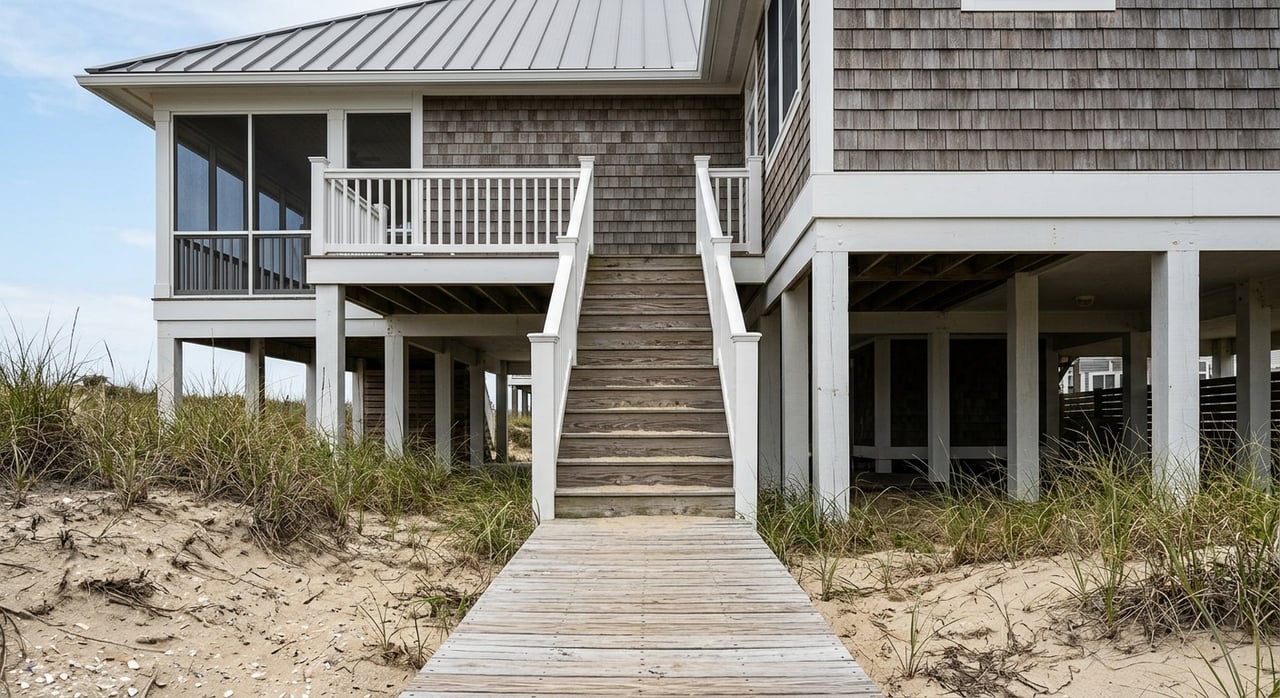
Homes here often skew larger and more custom in style. Raised foundations, outdoor decks, pools, and features like elevators or private boardwalks are common. The design guide also points to coastal building materials such as standing seam metal roofs, wood or fiber-cement siding, and pier-style foundations.
What prices look like in the Plantation
The Plantation tends to sit at the higher end of the island market, especially for Gulf-front homes. Current examples include Gulf-front homes around $2.0 million to $2.25 million, a bayfront home around $1.9 million, a Plantation residence under $800,000, and a Gulf-front condo around $715,000. That spread shows how much value depends on frontage, view, and property type.
If you want a shorthand view, the Plantation often fits buyers looking for a private, polished coastal setting with higher-end inventory. It can also work well if you want a custom home feel rather than a more mixed middle-island streetscape.
Central Gulf Beaches overview
The Gulf Beaches corridor, including the central island and lighthouse area, offers the broadest mix of property types and price points. This is where many buyers find the clearest middle market on St. George Island. It combines beach access, central convenience, and a wide range of lot and home styles.
A local brokerage breaks Gulf Beaches into five units. Unit 1 begins near the bridge and includes commercial blocks, while Units 2 and 3 are the classic beach blocks many buyers picture when they think of St. George Island. Unit 4 has a stronger bay-side edge because much of the bayfront is state land, and Unit 5 on the west side bayside includes canals and deep-water channels.
Why many buyers start here
This area gives you the island’s most flexible value ladder. Current area data shows Gulf Beaches with listings from about $70,000 to $3.8 million, with an average around $832,000. You can see everything from interior and near-beach lots to older cottages, renovated beach houses, and premium waterfront homes.
For buyers who do not need top-tier Gulf frontage, this can be the easiest place to find options at several budget levels. Unit 5 is especially notable because local sources describe it as having some of the least expensive interior, bay-view, and Gulf-view lots on the island.
What beach access is like here
Units 2 and 3 are known for their classic beach-block layout. Lots are typically around 100 by 150 feet, and beach access points are placed at the numbered streets. Because homes sit so close to the water, many properties enjoy Gulf views even if they are not directly on the beach.
That makes the central corridor especially appealing if your top priority is easy beach access without always paying absolute Gulf-front pricing. It is also one of the most practical zones for buyers who want to balance personal use with guest appeal.
What homes feel like in Gulf Beaches
Housing in this area is more varied than in the Plantation. You may find older cottages, updated beach homes on pilings, and some condo or townhome options closer to the lighthouse and island center. Under-$800,000 examples include bay-view and quiet residential homes that are still close to central island destinations.
In simple terms, Gulf Beaches is the best area to explore if you want choices. It offers a mix of entry points, home ages, and access patterns that can suit both second-home buyers and rental-minded shoppers.
East End overview
The East End is the island’s quietest and most natural-feeling zone. It runs from roughly 11th Street East toward the state park and has a more peaceful, tucked-away character than the central corridor. If you want a setting with more natural buffering and less through traffic, this area often rises to the top.
A local area breakdown describes pristine beaches, sound views, and access to park trails and shoreline. On the beach side, first-tier lots can reach the beach without crossing a road. On the bay side, you will find pine trees, bay views, and several small private communities with docks.
How the state park shapes the East End
The state park is a major reason this part of the island feels so different. Florida State Parks says the park covers 1,962 acres and includes 9 miles of undeveloped beach and dunes. The East Pass is accessible only by bicycle, walking, or boat, not by vehicle.
That protected setting creates a quieter and more remote feel. For many buyers, that is the East End’s biggest advantage. You are not just buying a home here. You are also buying into a lower-density setting shaped by preserved land.
East End communities and prices
The East End includes a few distinct property types. Local sources note 300 Ocean Mile, a townhome community with pools and dune walkovers, as well as Sunset Beach, a planned unit development with Mediterranean-style homes, a pool, gated entry, and both Bay and Gulf views.
Current East End pricing shows a wide premium range, with a low around $215,000, an average around $1.3 million, and a high around $4.7 million. Active examples include a bayfront parcel around $849,000 and bayfront homes around $1.4 million to $1.9 million. As in other parts of the island, water frontage and dock access can push values up quickly.
Bay-side and canal areas
Not every future beach homeowner wants surf-front living. Some buyers care more about boating, fishing, kayaking, dock access, and sunset water views. For that lifestyle, the island’s bay-side enclaves and canal communities are often the better fit.
Bay-side options show up in all three major zones, but they feel different depending on location. In the Plantation, the Bayside neighborhood is small and does not include clubhouse, pool, tennis, or fitness access. On the East End, some bay-side communities include private or community docks, while central island canal areas can offer practical boat access at a lower price than top-tier beachfront homes.
What trade-offs to expect
The bay side usually means giving up direct surf access in exchange for easier boating and more privacy. That trade can make sense if your ideal day includes launching a boat, watching the sunset, or keeping water gear close at hand.
Current examples show bayfront and canal-access homes around $675,000, $1.375 million, and $1.495 million, plus a bayfront lot around $849,000. These properties can still command strong prices, but they often remain below the very top Gulf-front single-family homes.
What drives price on the island
At the market level, St. George Island is sitting in roughly a $1.1 million median listing environment. Realtor.com reports a March 2026 median listing price of $1,149,000 with 219 homes for sale, while Redfin shows about 205 homes for sale and a 32328 median listing price around $1.14 million to $1.15 million. Realtor.com also reports homes selling about 5.82% below asking on average and a median of 85 days on market.
That suggests a market where buyers may have room to negotiate, even while premium waterfront inventory remains expensive. It also reinforces an important point for your search: island-wide averages only tell part of the story.
The biggest value factors
On St. George Island, price is strongly shaped by:
- Direct Gulf frontage
- Bay frontage or dock access
- Plantation membership or affiliate status
- Lot size
- Street-to-street positioning
- First-tier location
- Condo versus single-family home
- Custom features and upgrades
In short, two homes in the same general area can have very different values based on access, frontage, and physical setup. That is why area knowledge matters so much here.
What second-home buyers should verify
Before you fall in love with the view alone, it helps to confirm the coastal details that affect ownership. Franklin County says new structures and substantial additions on St. George Island must meet 140 mph wind design standards. The county also requires surveys, flood information, and in some cases shoreline inspections.
The county zoning department handles permits related to docks, boat lifts, seawalls, riprap, and boardwalk-related work. County building instructions also note that the Gulf side of St. George Island is affected by the state Coastal Construction Control Line. Buyers should verify the parcel’s FEMA flood designation before making assumptions about elevation or insurance needs.
A practical buyer checklist
As you compare areas and properties, verify:
- Flood designation for the specific parcel
- Whether the home is Gulf-front, first-tier, bayfront, or interior
- HOA, association, or affiliate status
- Amenity access, if any
- Existing dock, boat lift, or boardwalk details
- Whether planned improvements may need county permits
- Wind and coastal construction factors tied to the lot
This step is especially important if you are buying a second home, investment property, or vacant lot for future building.
Which area fits your goals
The best part of St. George Island depends on how you plan to use the home. If you want privacy and a more structured setting, the Plantation may be the best fit. If you want the widest range of price points and central beach access, Gulf Beaches often makes the most sense.
If your priority is a quieter setting near preserved shoreline, the East End stands out. If boating comes before beach frontage, bay-side and canal areas deserve close attention. Matching the area to your lifestyle is often the smartest first step before narrowing down individual homes.
A local guide can make that process much easier, especially on an island where frontage, permits, flood factors, and community rules can vary a lot from one block to the next. If you want help comparing areas, touring homes, or evaluating lots, Chasity Hill can help you navigate St. George Island with local insight and a clear plan.
FAQs
Which St. George Island area has the easiest beach access?
- Gulf-front and first-tier homes in the Gulf Beaches and Plantation offer the most direct beach access, while the East End also provides close access in a quieter setting.
Which St. George Island area feels the quietest?
- The East End and some Plantation bay-side pockets tend to feel the quietest because they have more natural buffering and a lower-density feel.
Which St. George Island area is best for boating?
- Bay-side enclaves and canal communities are usually the best fit for boating, especially properties with existing docks or boat lifts.
Where are the lower entry prices on St. George Island?
- Interior or non-frontage Gulf Beaches lots and some middle-island homes generally offer the broadest value range and lower entry points.
What should St. George Island buyers verify before making an offer?
- Buyers should confirm flood designation, HOA or amenity access, frontage type, wind and construction factors, and whether dock or shoreline improvements may require county permits.