The first nest of 2026 was found in a downpour on a Tuesday morning in May, and the volunteer who called it in said the rain couldn't dampen her spirits. Two months later the island is inside the part of the season that reorganizes everything else. June and July are when loggerheads work hardest, and this July the state park picked the same window to close its campground for a year.
Both facts are worth holding in one hand. The island's nightly grammar has been rewritten twice in five weeks, once by biology and once by a construction schedule, and the effect on a resident's evening is more coherent than either event on its own.
The July 13 shift, and where it sends you instead
The campground at Dr. Julian G. Bruce St. George Island State Park is closed for renovations effective July 13, 2026. The closure is not a two-week inconvenience. The main campground closed for approximately one year for a major renovation project that will add 30 new campsites and a new bathhouse. If your summer routine included east-end evenings on the campground loops, biking in for a shower after a beach day, or meeting out-of-town family at a reserved site, the routine is gone until 2027.
What replaces it, if you want to stay inside park boundaries, is primitive. Gap Point primitive camping remains open during the main campground renovation, but access is by foot on a 2.5-mile hike or by shallow-draft vessel, and there are no restrooms, fresh water, or showers. That is not a substitute for the family campground. It is a different activity with a different audience, and it is the only overnight option the park still offers this summer.
For the rest of us the practical shift is smaller and quieter. The park is still open sunrise to sunset for day use. Beach access, the pull-offs, the trails, and the East Slough remain in the same place they were in June. What has moved is the center of gravity of a summer evening: fewer campfires burning at the east end after dark, fewer headlights coming back off the park road at ten, and a corresponding uptick in beach traffic on the developed stretch of the island, where the sea turtle stakes are.
What "clean, flat, dark" actually asks of a household in July
The message from the SGI Sea Turtle Patrol this year is three words, and it is aimed squarely at people who live here.
Keep the beach clean of debris, flat and devoid of any holes, and dark.
That is the standard the Patrol has been repeating in interviews, and it is more specific than it sounds. The mission every year is to mark, tag, and keep safe the hundreds of nests that pop up on the island throughout the summer and early fall, and a key part is messaging. Clean means beach chairs, umbrella bases, coolers, and toys carried off at the end of the day rather than staged for tomorrow. Flat means filling in the holes the kids dug, because a hatchling that falls into one is a hatchling that does not reach the water. Dark is the one that changes what you do inside the house.
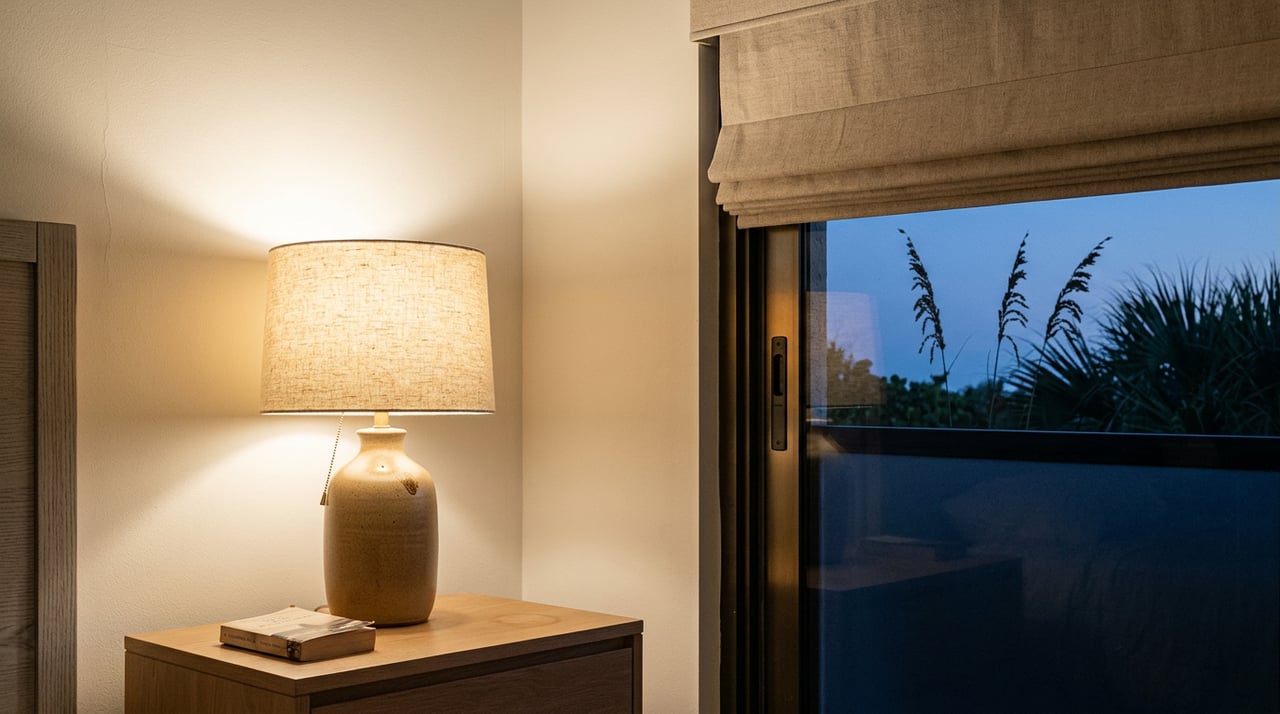
Loggerhead hatchlings see light and think that is the moonlit sea, so they will crawl towards that light and away from the dark land. A porch fixture that was fine in April becomes a problem in July if it throws visible light onto the sand. So does a television glowing behind an uncovered slider. Locals have known this for years, but the population of nests on this island is unusually well documented, and the timing is not casual. Nesting often peaks in June and July. If you have been meaning to switch a Gulf-side fixture to an amber bulb or add a blackout shade to the room that faces the dune walkover, this is the month it actually matters.
The other part of "dark" is behavioral. No bonfires on the beach in July. No sparklers left over from the Fourth. No phone flashlights sweeping the sand on the walk back from dinner. If you see a mama turtle coming to land to make a nest, stand back and observe her quietly from a distance; it's a remarkable sight, but don't do anything to disturb her.
The Patrol has a new legal shape this year
The group asking for those changes is not quite the group that asked last summer. The SGI Sea Turtle Patrol has a new look this year as they've re-branded as an independent 501(c)(3) non-profit, which gives them a bit more freedom to expand their outreach, and they're partnering with an FSU professor and Franklin County Schools to bring the love of the sea turtle into the classroom. The immediate implication for residents is that the Patrol can accept donations directly and can run its own programming without going through an intermediary. The medium-term implication is a bigger presence in local schools this fall.
They are also not the only group working the beaches. St. Vincent National Wildlife Refuge monitors 9 miles of St. Vincent Island, St. George Island State Park monitors 9 miles on the eastern end of St. George Island, the Apalachicola National Estuarine Research Reserve monitors 9 miles on Little St. George Island and 7 miles of mainland between Eastpoint and Carrabelle, and a part-time staff member hired by ANERR coordinates volunteers who monitor 11 miles of St. George Island outside the state park. Add that up and you have four permit holders working roughly 45 miles of Franklin County beach across a June to October window. The Patrol's 11 miles are the miles that run through your neighborhood.
If you want to be involved without joining a patrol shift, the Reserve runs an adoption program. You can adopt a sea turtle nest on Little (Cape) St. George Island for the 2026 nesting season, and your contribution helps the Friends of the Reserve meet the current needs of the Stewardship team, which conducts beach patrols for nest monitoring, evaluations on hatch success, and provides care for hatchlings until they can be released. Nesting typically begins around mid-May, so it might be June or July before your sponsored nest is assigned. If you sign up this week, your nest is likely being laid right now.
Where dinner fits when the beach goes dark at nine
The "dark" part of the equation has a knock-on effect on the food map. Late walks home from a beachfront table are the moment residents are most likely to point a flashlight at the sand, so the routine that works best in July is one that puts you inside a room by full dark and lets you walk or drive home along Gulf Beach Drive rather than across the dune.
The anchors have not moved. What has changed is which ones you lean on this month:
- Blue Parrot Ocean Front Cafe on West Gorrie is the only restaurant on St. George Island located directly on our beautiful white sand beach, which is exactly why an early sitting works better than a late one in July. Sunset dinners land you back at the car before hatchlings would be moving.
- The Beach Pit is a screened, interior room and a covered patio, so the porch light question does not follow you to the table. Over 25 years of experience combined with Texas style BBQ, fresh seafood, and a menu designed to please everyone in the family.
- Paddy's Raw Bar faces the bay, not the Gulf, which is the right side of the island for a July night out.
- Captain's Corner Store is the fallback when you decide at seven you are not cooking. Captain's Corner Store & Deli is open 7 days a week, 6 AM to 10 PM serving breakfast and lunch, pizza is available until closing, and Captain's has the coldest beer cave and the only drive through on the Island.
- Weber's Little Donut Shop is a morning-after ritual, not an evening one, but it belongs on the list because turtle season is a season of early mornings, and Weber's is what makes 7 a.m. tolerable.
Notice what is missing from the list. Long beachfront lingering after dark. Fire pits on the sand. A stroll home along the Gulf with the phone flashlight on. Those come back in November.
A Thursday in mid-July, sequenced
If you are trying to get the rhythm right this week, one workable version:
- 7:15 a.m. Weber's, before the line, then a walk east on the beach while the sand is still cool and you can see any tracks from overnight without disturbing them.
- 10:00 a.m. Errands in Eastpoint or a swim off the developed stretch, avoiding marked stakes.
- 5:30 p.m. Early sitting at the Blue Parrot or the Beach Pit. This is the hinge that makes the rest of the evening dark-compliant.
- 8:15 p.m. Home. Audit the Gulf-facing side of the house for the season: amber bulbs, blackout curtain in the master, television angled away from the slider.
- 9:30 p.m. No beach. Porch on the bay side, or inside.
- Tomorrow. If you have been meaning to sign up for a nest adoption or a Patrol shift, this is the week the decision matters most.
The campground closure is a year-long story. The nesting peak is a six-week story. Both are asking the same thing of a resident this month, which is to run the evening a little quieter, a little earlier, and a little more inland than you did in April.
If you own a Gulf-facing home on the island and you are thinking about the kind of small changes that make a house more turtle-season friendly, or if you are weighing what a year without the state park campground means for your rental calendar, Chasity Hill grew up here and works with owners on exactly these questions. Talk with Chasity — Schedule a Tour.