Thinking about turning your St. George Island home into a stronger vacation rental? On a beach-focused island, guests notice the little things fast, from how easy it is to rinse off sand to whether the porch feels ready for a relaxed evening outside. If you want your home to photograph well, handle frequent turnover, and feel comfortable from check-in to check-out, a few smart updates can go a long way. Let’s dive in.
Why guest-readiness matters on St. George Island
St. George Island draws visitors for uncrowded white-sand beaches, outdoor recreation, and a laid-back coastal setting without high-rises. Guests often arrive ready for beach days, biking, fishing, kayaking, shelling, and time outdoors, so your home should support that lifestyle in a simple, practical way.
That means guest-readiness is not just about decor. It is about creating a home that works well for sand, salt air, humidity, wet towels, coolers, and repeated turnover while still looking polished in photos.
Start with durable interior choices
Coastal homes face extra wear. NOAA notes that salt spray can corrode materials and that moisture can lead to decay, so your finishes and furnishings need to be chosen with long-term use in mind.
For many St. George Island rentals, sturdy furniture and easy-clean surfaces are the safest bet. Delicate fabrics, high-maintenance finishes, and overly fussy pieces may look nice at first, but they can be harder to maintain between guests.
Choose easy-clean flooring and textiles
Hard-surface flooring is often a practical fit for a beach rental because it is easier to clean after sandy days. Low-pile rugs can still add warmth without creating as much maintenance as thicker options.
Washable or replaceable textiles also help. Performance fabrics and simple bedding setups are easier to refresh, especially during busy turnover periods.
Use corrosion-resistant hardware
Salt-heavy air can be tough on metal finishes. Corrosion-resistant hardware on doors, cabinets, and exterior-adjacent spaces can help your home hold up better over time.
This is one of those upgrades guests may never mention directly, but it can reduce wear and keep the home looking cared for. In a coastal market, that matters.
Make comfort simple and consistent
Guests expect the basics to be easy. Airbnb recommends stocking essentials like toilet paper, soap, one towel and pillow per guest, and linens for each bed, with bathroom items such as shampoo and conditioner also helping create a smoother stay.
You do not need to overcomplicate this. A clean, comfortable, well-stocked home usually performs better than a home filled with extras that are hard to maintain.
Focus on the bedroom experience
A comfortable mattress, fresh linens, and bedside lighting can make a meaningful difference in guest satisfaction. After a long travel day or a full day outside, people want a space that feels restful right away.
White towels are also easier to maintain and replace as needed. That can simplify your cleaning routine while keeping the presentation crisp and consistent.
Clear space for guest belongings
One common mistake in vacation rentals is leaving too little room for guests to unpack. Clearing drawers, emptying part of the closet, and opening up surfaces gives guests space for clothes, bags, toiletries, and beach gear.
Owner items and valuables should be kept in locked storage. This protects your belongings and makes the home feel less crowded and more intentional.
Design for beach living
On St. George Island, beach living shapes what guests need most. A beautiful interior matters, but the homes that feel easiest to use often stand out.
Think about how guests move through the property after coming back from the beach. If the path from outside to inside is easy, organized, and quick to clean, you are already improving the experience.
Add a rinse-off area
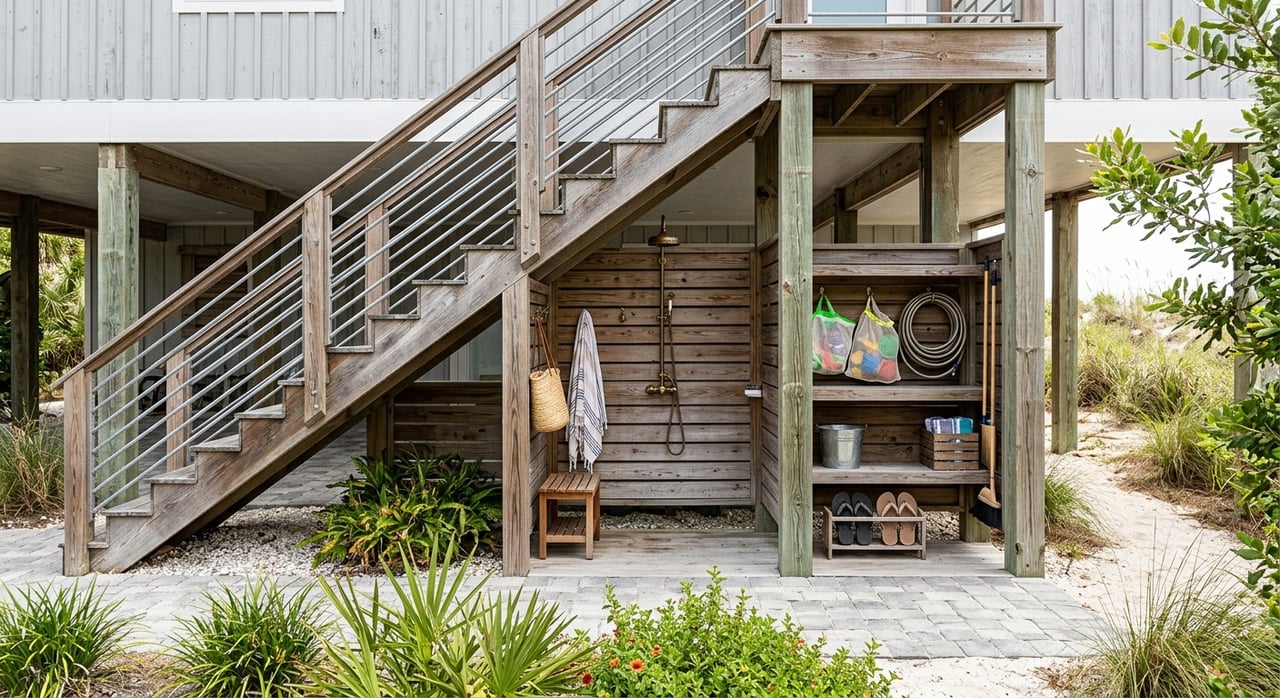
A rinse-off spot is one of the most practical features you can add to a beach property. It helps guests clean off sand before entering and can reduce wear on floors, rugs, and furniture.
Even a simple setup can make a difference. The goal is to support easy cleanup without creating confusion or clutter near the entry.
Create an organized entry zone
Hooks, benches, and clearly defined storage near the entry can help guests manage towels, bags, hats, and shoes. On an island where visitors often bring coolers, umbrellas, chairs, and bikes, this kind of organization is useful.
If you have storage for beach gear, make it easy to access and easy to understand. The more intuitive the setup, the more guest-friendly the home feels.
Keep porches and outdoor spaces functional
Outdoor living is part of the appeal here. Guests are often looking for porches, seating areas, and spaces that let them enjoy the breeze after a day on the water or trail.
Choose outdoor furniture that is sturdy, simple, and suited to repeated use. If your home has a view, screened area, or relaxing porch layout, make sure it feels clean, open, and photo-ready.
Stay ahead of humidity and pests
Humidity is not just a comfort issue in coastal homes. Moisture can contribute to mold, decay, and other maintenance concerns, and coastal conditions can also increase pest risks.
That makes prevention a key part of guest-readiness. A home that smells fresh, feels dry, and shows signs of routine upkeep is more comfortable for guests and better protected over time.
Prioritize HVAC and dehumidification
Routine HVAC maintenance can help your home stay cooler, drier, and more consistent between guest stays. Dehumidification may also support better indoor comfort in a humid coastal setting.
If your home tends to feel damp, this is worth addressing before peak rental periods. Guests notice comfort immediately, even if they do not know what systems are behind it.
Have a pest-control plan
Pest issues can damage both the guest experience and your property. A regular pest-control plan can help reduce surprises and support a cleaner, more reliable turnover process.
This is especially important in homes that sit vacant between bookings or have outdoor storage areas. Preventive care is usually easier than last-minute fixes.
Keep safety clear and easy
A guest-ready vacation home should be simple to navigate and easy to access. Airbnb recommends maintaining a safe home, keeping smoke and carbon monoxide detectors working, disclosing hazards, and securing entry codes.
In practice, that means fewer obstacles, better instructions, and systems that are easy for guests to use without stress.
Simplify self check-in
If your home offers self check-in, make the process clear and straightforward. Guests appreciate easy-to-use locks and direct instructions, especially after a long drive.
Secure entry codes should be managed carefully, and directions should be written in a way that is easy to follow. Clear communication can reduce friction before the stay even begins.
Remove clutter from walkways
Uncluttered walkways inside and outside the home help guests move through the space more safely. This is especially useful in beach homes, where luggage, coolers, and extra gear can pile up quickly.
A cleaner layout also photographs better. Safety and presentation often go hand in hand.
Improve curb appeal with coastal landscaping
Your exterior sets the tone before guests ever walk inside. On St. George Island, landscaping should match the coastal environment and stay manageable between turnovers.
UF/IFAS recommends salt-tolerant plants for coastal landscapes and notes that sea spray and salty soil affect what will thrive. That makes local adaptability more important than high-maintenance design.
Use salt-tolerant, low-maintenance plants
Options such as sea oats, wax myrtle, and bougainvillea are named by UF/IFAS as plants suited to coastal conditions. Protecting native plants already adapted to the site can also be a smart move.
For a vacation rental, simple and wind-resilient landscaping is often the better fit. It helps the property stay neat, attractive, and easier to manage over time.
Keep outdoor lighting restrained
Because the island’s natural setting is part of the draw, exterior lighting works best when it is functional rather than overdone. Practical lighting at stairs, parking, and entry points can help guests arrive safely without overwhelming the outdoor atmosphere.
This approach also fits the area's stargazing appeal and natural beach setting. Subtle choices often feel more appropriate than decorative excess.
Make your listing photo-ready
Photos play a major role in booking decisions. Airbnb notes that guests often prioritize photos, descriptions, and reviews, and that the first five photos are especially important.
If your home has been updated, your listing should reflect it right away. Even small improvements can shape first impressions when they are clearly shown.
Highlight the features guests search for
If your home offers amenities such as wifi, free parking, air conditioning, a kitchen, laundry, self check-in, a pool, or a hot tub, make sure those features are visible in your photos and clearly described. Airbnb’s internal data shows these are commonly searched amenities.
On St. George Island, it also helps to show the features that support beach trips and outdoor living. That may include porches, gear storage, beach access, bunk rooms, parking, and rinse-off areas.
Refresh photos after upgrades
Airbnb recommends updating listing photos and descriptions whenever improvements are made. New porch furniture, improved landscaping, better bedding, or a reorganized entry area should not stay hidden.
Use daylight, remove clutter, and make sure rooms feel open and clean. Recent, accurate photos help set expectations and can strengthen your home’s appeal.
Give guests clear, useful information
A smooth stay often starts with good communication. Airbnb recommends including check-in instructions, contact information, wifi details, house rules, and local guidance.
For St. George Island, a simple guest binder can make the stay easier. You can include local maps, practical house info, and a short selection of area recommendations, especially since Franklin County’s visitor center provides brochures, guides, and maps for visitors.
Keep instructions easy to scan
Guests should be able to find the basics quickly. Use short sections for check-in, wifi, parking, trash, beach cleanup, and checkout steps.
The goal is not to overwhelm them with information. It is to answer the most common questions before they have to ask.
When to upgrade before you list or sell
If you are preparing a St. George Island home for vacation rental use, resale, or both, guest-readiness can shape how buyers and renters see the property. A home that already feels organized, durable, and easy to manage may stand out more in this market.
That is especially true for owners who want to appeal to second-home buyers or investors looking for a turnkey coastal property. Thoughtful staging, smart improvement choices, and strong visual presentation can help showcase the home’s full potential.
If you want guidance on preparing your St. George Island property for the vacation-rental market or positioning it for sale, Chasity Hill brings local insight, hands-on preparation advice, and polished marketing built for the Forgotten Coast.
FAQs
What makes a St. George Island home feel guest-ready for vacation rentals?
- A guest-ready home is clean, easy to use, stocked with essentials, and designed for beach living with features like organized entry storage, durable finishes, and simple outdoor cleanup.
What interior features work best in a St. George Island vacation rental?
- Hard-surface flooring, low-pile rugs, washable textiles, sturdy furniture, comfortable mattresses, and corrosion-resistant hardware are practical choices for coastal conditions and frequent turnover.
What amenities should owners prioritize in a St. George Island rental home?
- If your home offers them, commonly searched amenities worth highlighting include wifi, free parking, a kitchen, air conditioning, washer access, self check-in, and features like a pool or hot tub.
How should owners landscape a St. George Island vacation rental?
- Salt-tolerant and low-maintenance coastal landscaping, including plants suited to sea spray and salty soil, can help the property stay attractive and manageable between guest stays.
Why do updated photos matter for a St. George Island vacation rental listing?
- Updated photos help guests see the home accurately, showcase improvements clearly, and highlight the beach-focused features and amenities that often influence booking decisions.