Torn between North and South Cape San Blas? You are not alone. From the outside, the peninsula looks uniform, yet each side offers a distinct blend of beaches, access, neighborhood feel, and rental appeal. In this guide, you will learn how locals define the two areas, what it feels like to live or vacation in each, and the key steps to take before you buy. Let’s dive in.
What “North” and “South” mean locally
Locals and MLS listings use “North Cape” and “South Cape” as practical neighborhood labels rather than official boundaries. In everyday terms, many people consider the area north of the Salinas Park and Cape Trading Post area to be North Cape, stretching up toward the St. Joseph Peninsula State Park. South Cape runs from the Salinas Park area toward Indian Pass.
Why this matters: these labels help you understand proximity to the state park, typical community amenities, and the feel of nearby neighborhoods. They are useful for planning tours and comparing how each side fits your lifestyle.
Beach access and parks across the Cape
North-end nature anchor
If you want miles of protected shoreline, the northern tip’s highlight is St. Joseph Peninsula State Park. It offers white-sand beaches, hiking, a boat ramp, and day-use areas, which makes the North Cape especially appealing for nature lovers and people who value quick access to undeveloped coast.
Mid-Cape public access points
Several public parks serve both sides of the peninsula. Salinas Park is a common meeting point mid-Cape with parking, restrooms, and access to both bay and Gulf. Cape Palms Park provides additional boardwalk access and facilities for easy beach days.
You will also find the William J. “Billy Joe” Rish Recreation Area on the Cape, a 100-acre site with boardwalks to the Gulf and bay, an accessible pool, and a bayside launch. Its layout makes everyday coastal access straightforward for a wide range of visitors.
Beach rules and drive-on access
Beach driving is allowed in designated areas of Gulf County with a county-issued Beach Driving Permit. Fees, access points, and vehicle rules are local decisions, so always verify current details with the Gulf County Tax Collector. The county also enforces beach rules, including a Leave No Trace ordinance and seasonal lighting guidelines for sea turtles. Local guides offer good overviews of these rules, including this summary of beach driving and Leave No Trace.
Neighborhood feel and home types
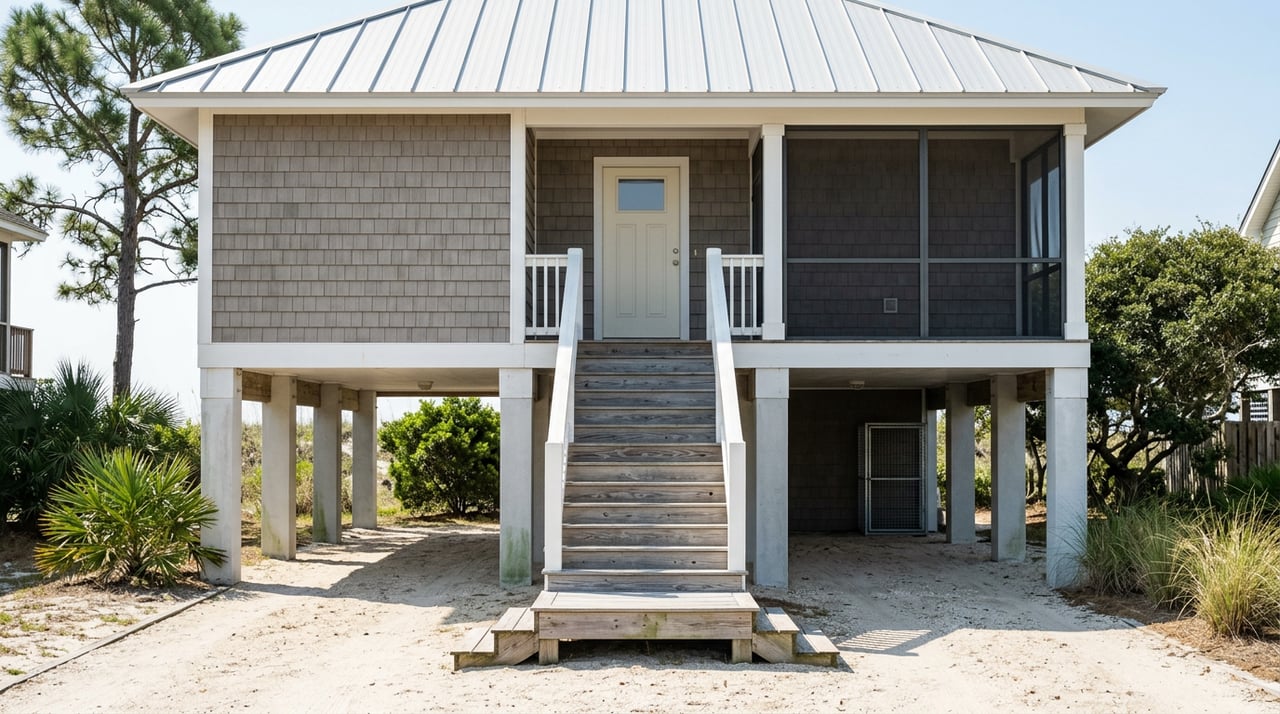
You will see similar coastal architecture on both sides: elevated Gulf-front and Gulf-view homes, bayfront cottages, wooded interior lots with multi-story houses, and subdivisions with amenities. Many homes are on pilings to address coastal flood and wind exposure.
North Cape housing snapshot
North Cape skews toward amenity-rich communities alongside quieter stretches near the park. Gated or HOA neighborhoods often include features such as pools, tennis or pickleball courts, docks, and deeded beach access. Buyers who want a turn-key vacation home or a primary residence with shared facilities frequently prioritize these communities.
South Cape housing snapshot
South Cape includes beachfront and first-tier neighborhoods with deeded access, plus bayfront homes and interior, wooded lots. Some pockets feel more spread out, with a quieter residential pattern. You will find a mix of homes and lots suitable for multi-level builds, plus neighborhoods with or without HOAs. Subdivisions commonly referenced on the south end include Surfside Estates and San Blas Plantation.
Which side fits your lifestyle
Consider these quick-fit signals when choosing where to focus your search:
- You want immediate access to undeveloped beaches and trails: lean North Cape near the state park.
- You value HOA amenities like pools, docks, and organized facilities: many North Cape subdivisions will appeal.
- You prefer quieter, more spread-out pockets and a blend of bayfront, beach, and interior options: explore South Cape.
- You plan to host multi-generational trips or longer stays: look for communities on either side with deeded access, ample parking, and guest-friendly rules.
Buyer due diligence on the Cape
Barrier islands are dynamic. A little homework goes a long way in protecting your investment.
- Check flood zones and insurance implications. Many coastal lots lie in FEMA flood zones that affect design, elevation, and coverage. Start with the Gulf County flood protection office for maps, elevation data, and guidance.
- Confirm coastal permitting. Florida’s Coastal Construction Control Line program governs work seaward of the CCCL and on dunes. Before you plan improvements or new builds, review the Florida DEP Beaches, Inlets and Ports program and request any prior DEP or CCCL permits from the seller.
- Understand recent storm history. Hurricane Michael in 2018 reshaped parts of the peninsula and influenced beach restoration efforts. See the USGS imagery and discussion of local impacts to understand why shoreline management is a recurring topic.
- Verify local beach-use rules. If you want drive-on access for personal use or rental guests, confirm current permit fees, designated access points, and seasonal rules with the Gulf County Tax Collector.
- Review HOA covenants. Rental rules, parking limits, pet policies, and architectural standards vary. Ask for the latest documents before you write an offer.
- Clarify utilities and services. Some properties connect to community systems while others use septic or private wells. Factor tap fees and utility availability into your budget.
Rental potential and timing
If income matters, seasonality and location play big roles.
- Peak periods. Summer is the primary high season. St. Joseph Bay’s scallop season is a strong secondary draw, increasing late-summer bookings. The Florida Fish and Wildlife Commission lists current dates for the area — review the latest bay scallop season guidance.
- What drives shoulder-season demand. Proximity to the state park, bayside kayaking and fishing, and neighborhood amenities such as pools and docks can help fill calendars beyond peak weeks.
- Plan your pro forma. Ask 2 to 3 local property managers for conservative and optimistic income estimates for a specific address. A good starting point is to speak with firms like Coastal Joe Vacation Rentals and compare their projections.
- Taxes and registrations. Florida sales tax and county tourist development tax collection apply to most short-term rentals, and licensing or inspections may be required. Verify the latest steps with the county and state before hosting.
How to compare homes on each side
Use this quick checklist to evaluate any listing, North or South:
- Access and lifestyle. Distance to the state park or Salinas Park, walk-on boardwalks, and nearby bay launches.
- Lot tier and exposure. Gulf-front, first-tier, bayfront, or interior — and how that affects views, erosion risk, and wind exposure.
- Amenities and rules. HOA presence, community pools, docks, rental rules, pet policy, and parking.
- Readiness to use or rent. Turn-key condition, storage for beach gear or boats, and exterior materials suited to the coast.
- Due diligence items. Flood zone, prior DEP or CCCL permits, survey, elevation certificate, utility connection, and current insurance quotes.
Ready to tour both sides?
You do not have to pick a side today. Start with the lifestyle you want, then match it to the block-by-block reality on the Cape. When you are ready to walk beaches, compare neighborhoods, and run the numbers on specific properties, connect with Chasity Hill for on-the-ground guidance and a curated tour.
FAQs
What is considered North vs South Cape San Blas?
- Locals often use Salinas Park as the mid-Cape reference point. North Cape runs from that area toward St. Joseph Peninsula State Park, and South Cape extends from Salinas Park toward Indian Pass. These are neighborhood and MLS conventions, not official boundaries.
Are Cape San Blas beaches driveable, and what permits do I need?
- Beach driving is allowed only at designated access points with a county Beach Driving Permit. Confirm current fees, access points, and rules with the Gulf County Tax Collector and review a local overview of Leave No Trace and beach rules.
How do flood zones and the CCCL affect building or remodeling?
- Many Cape properties lie in FEMA flood zones that influence design, insurance, and elevation. Projects near the shoreline may also trigger Florida’s CCCL review. Start with the Gulf County flood protection office and the Florida DEP coastal permitting program to understand requirements.
When is scallop season in St. Joseph Bay, and why does it matter for rentals?
- St. Joseph Bay’s scallop season typically runs late summer. Current dates and rules are posted by FWC — check the latest bay scallop season information. The season often boosts shoulder bookings and local activity.
What changed on the Cape after Hurricane Michael?
- Hurricane Michael reshaped shorelines and damaged structures on the peninsula, which led to restoration work and ongoing attention to erosion and permitting. See the USGS overview and imagery of local impacts for context before evaluating coastal lots.